

Evil Minds: Dirty Charades!
Super Massive Ventures Inc.
I went into Evil Minds: Dirty Charades! expecting a party word game that would work best with a loud group, and that first impression proved accurate. This is not a quiet vocabulary exercise or a solo puzzle designed for careful planning. It is a mature take on charades, built around the awkwardness, speed, and laughter that happen when people have to communicate ideas without simply saying them. The basic appeal is easy to understand, but the experience depends heavily on the people in the room and their willingness to play along.
Developed by Super Massive Ventures Inc., the game is free to start and sits in the word-game category. Its mature 17+ rating is important rather than decorative: the humor and prompts are aimed at adults, so I would not treat it as a family-friendly alternative to ordinary charades. The game has been available since March 26, 2015, and its current version is 1.5.9. On Android, it requires at least version 5.0 of the operating system.
How the first round establishes the game’s goals
The early goal is refreshingly direct: get people acting, guessing, and reacting as quickly as possible. There is no complicated character build, long tutorial campaign, or elaborate setup to learn before the fun can begin. The game’s identity comes from turning familiar charades into something deliberately cheekier, so the first few prompts are mainly about discovering how comfortable your group is with that tone.
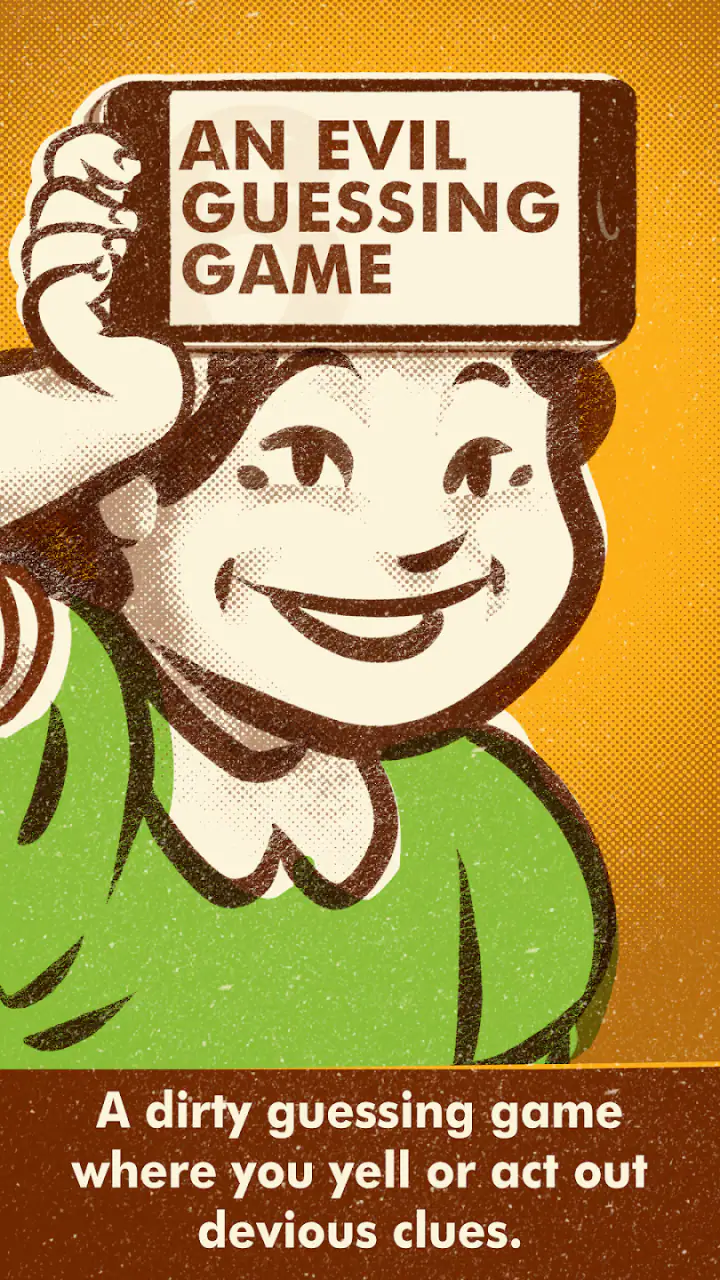
That makes the opening minutes more revealing than they might be in a conventional word game. A group that enjoys improvisation will usually understand the appeal almost immediately. Someone holds the device, another person performs, and everyone else tries to interpret the performance. The entertainment comes from the gap between the prompt in front of the performer and what the audience thinks is happening.
I found that the best early objective is not simply to guess correctly. It is to establish a rhythm. One person needs to become comfortable performing without overthinking every gesture, while the guessers need to call out ideas freely instead of waiting for perfect evidence. If everyone treats each turn like a test, the game feels stiff. If the group accepts a little embarrassment, the same prompts become much more entertaining.
Related News

Threads in Real Life: Who Should Join, Lurk, or Leave

How SHEIN Turned Shopping Into an Endless Content Feed

How to Make Fortnite Feel Smarter on Mobile

Should You Switch to Microsoft Outlook on Mobile?

Why Gallery Keeps Pulling Users Back

X Review: Why Its Network Still Matters
This is also where the adult focus affects the audience. For a group of close friends, the mature material can make the game feel more distinctive than standard charades. For colleagues, younger relatives, mixed-age gatherings, or anyone who dislikes sexual humor, that same identity can become the main obstacle. I would decide who is playing before opening it, rather than assuming the free price makes it suitable for every party.
What progress feels like during a session
The game does not rely on a traditional adventure-style progression to make a session feel active. Instead, progress is visible through the group itself: people become faster at recognizing the style of prompts, performers take bigger risks, and the guessing becomes less cautious. That human improvement is the main progress signal I noticed.
At the beginning, players may spend too long trying to create a precise imitation. After a few turns, they usually learn that broad gestures, exaggerated expressions, and quick experimentation work better. This is a useful shift because it gives the game a natural learning curve without requiring a large rules system. You are learning how to play with your friends, not merely memorizing instructions.
Gallery
There is another subtle signal of progress: the group starts developing its own shorthand. A particular movement may become an inside joke, or someone may discover that a certain friend always interprets gestures in an unexpected way. Those moments are not formal unlocks, but they help a repeat session feel different from the first one. The game supplies the prompt; the players create much of the lasting personality.
That strength also explains a limitation. If your group does not generate energy on its own, the app cannot completely manufacture it. A structured word puzzle can remain satisfying when played quietly because its challenge lives inside the software. This game depends more on performance and social chemistry. The app is the spark, not the entire fire.
Challenge and the shape of the difficulty curve
The challenge comes from translating an idea into movement while working under social pressure. That sounds simple, but it creates several layers of difficulty. A performer may understand the prompt instantly and still struggle to communicate it without speech. The audience may recognize the general subject but disagree about the exact answer. Meanwhile, every failed guess can make the next attempt either funnier or more frustrating.
I like that this challenge is physical and social rather than purely linguistic. A player who is not especially good at spelling or word puzzles can still become the strongest performer in the room. Someone with a large vocabulary is not automatically advantaged, because the task is about timing, expression, and reading the audience. That makes the game more inclusive than many conventional word apps, provided the player is comfortable acting.
The difficulty curve is therefore controlled by the group more than by a visible ladder. A confident group can raise the pressure by moving quickly and refusing to settle for vague guesses. A quieter group can slow down, discuss possibilities, and treat each prompt as a comic improvisation. This flexibility is useful at a party, but it means the experience may feel inconsistent from one gathering to the next.
There is a practical trade-off here: the game is easy to explain, but not always easy to perform well. New players can understand the premise almost immediately, yet they may still need several turns before they stop worrying about looking silly. I recommend starting with the most outgoing person rather than handing the first turn to the shyest guest. A strong opening performance teaches the room that exaggerated acting is expected.
Another helpful approach is to avoid judging every turn by whether the group reaches the answer quickly. Some of the best moments come from a completely wrong interpretation that exposes how differently people read the same gesture. If your group only values efficient correct guesses, the experience can feel more like a test. If it values surprising reactions as well, the challenge remains enjoyable even when a prompt goes badly.
Keeping momentum without forcing the room
Pacing is central to this kind of game. A charades session loses energy when players spend too long debating rules, choosing who goes next, or worrying about whether a prompt is appropriate. The straightforward design helps because there is little to explain, but the group still needs to manage the handoff between turns. I found that keeping the device moving and avoiding long pauses makes a noticeable difference.
The strongest sessions have a quick cycle: read the prompt, perform, guess, laugh, and pass the turn. That cycle creates a sense of momentum even without a complex progression system. If someone is struggling, another player can offer a broad guess or encourage a more exaggerated gesture instead of letting the entire room become silent. In practice, the social pacing matters as much as the game’s own structure.
The mature theme can increase retention pressure because players want to see what kind of awkward situation the next turn creates. That is a different kind of motivation from chasing a high score. The question becomes, “What will the next person have to act out?” rather than “How close am I to completing a level?” For the right group, that anticipation is enough to keep a session moving.
For the wrong group, the same pressure works against the game. A player who feels exposed may stop volunteering, and once several people become reluctant to perform, the pacing collapses. I would not recommend forcing participation. Letting the most enthusiastic players lead the first rounds is a better way to build trust, especially when the content is more provocative than ordinary party-game material.
Because the game is free, it is easy to try without committing money upfront. However, the presence of in-app purchases ranging from $0.99 to $4.99 per item means I would still check the purchase flow before passing the phone around at a party. This is particularly sensible when children might be nearby, even though the game itself carries a mature age rating. The free entry point is convenient, but it should not be confused with a completely frictionless setup for every household.
Who will keep returning, and who probably will not
Retention depends on whether your group enjoys replaying social situations rather than progressing through a long campaign. I can see this working well for recurring gatherings, road trips with friends, casual evenings at home, or a party where people want a quick activity that does not require everyone to sit silently. It is also useful as a warm-up: a few turns can break the ice more effectively than a formal introduction.
The game is less convincing as a personal daily word habit. If you want a solo app for expanding vocabulary, solving anagrams, or completing carefully balanced puzzles, this is the wrong direction. Its value appears when other people are present. Even a strong set of prompts cannot replace the reactions of a real audience, and the game’s mature humor narrows the situations where it can be brought out comfortably.
Compared with classic charades played with slips of paper, this version is more convenient because the prompts are already organized inside the app. You do not need to prepare a bowl of ideas or write them down before guests arrive. The trade-off is that paper charades gives the host complete control over the tone. With this game, the built-in identity is part of the appeal, but it also means you should not expect the same flexibility as a homemade family-friendly set.
Compared with mainstream word-party games, it is more dependent on acting and less dependent on board position, scoring strategy, or a carefully managed team structure. That makes it easier to start but potentially less satisfying for players who want a deep competitive framework. I would choose this when the goal is spontaneous laughter, not when the group is looking for a long tactical contest.
Its audience size also matters in practice. A very small group may run out of energy because every person performs frequently, while a large gathering may create too much waiting unless players take turns efficiently. The sweet spot is a group where everyone can participate regularly without feeling watched by an entire crowd. If your party is large, splitting into smaller circles can preserve the pace and make the mature prompts feel less intimidating.
Useful habits for getting better sessions
My first practical tip is to establish the tone before the first turn. Since the game is rated Mature 17+, I would tell everyone that the prompts are adult-oriented and give people an easy way to sit out. That small bit of preparation prevents the most common kind of friction: a guest feeling trapped by a joke they did not expect.
Second, use a confident performer as the opener. The first person teaches the room how broad the acting should be, how quickly guesses should come, and whether laughter is welcome when the performance fails. Choosing someone reserved can make the game appear dull when the real problem is simply that the group has not seen the intended style in action.
Third, treat wrong guesses as material rather than dead ends. If the room lands on an amusing alternative, acknowledge it and move on instead of forcing the performer to repeat the same gesture until someone reaches the official answer. This keeps the pace alive and reduces the pressure on players who are less experienced at charades.
Fourth, keep the device with a reliable turn manager. Passing it randomly can create confusion, especially when several people are talking at once. One person can quietly decide who performs next and hand over the phone immediately after a turn. That simple workflow removes dead air without adding formal rules.
Finally, do not use purchases as a substitute for group energy. Extra content may be useful for regular players who have already enjoyed the core experience, but buying more does not solve a mismatch between the game’s adult tone and the audience. I would first confirm that everyone likes the premise, then consider spending anything on additional items.
My verdict on the progression and replay value
As a progression-focused game, this is intentionally light. The early goal is to learn the rhythm, the progress signal is the group’s growing confidence, and the challenge rises or falls according to how aggressively the players perform and guess. There is no reason to approach it expecting a deep unlock tree or a long-term solo journey. Its progression is experiential: the room becomes quicker, louder, and more comfortable with the format.
That design is a good fit for a party game because it gets out of the way. I do not want to study a manual before asking friends to play charades, and I appreciate that the premise can be understood almost instantly. The downside is that repeat value can feel limited if you always play with the same quiet group or expect a visible sense of achievement after every session.
The game’s strong reception suggests that many players connect with its particular blend of words, acting, and adult humor. It has an average rating of 4.8 from around 4.6 thousand ratings, and it has passed half a million installs. Those figures fit my impression that this is a recognizable niche rather than an all-purpose word game: people who enjoy its tone are likely to enjoy it enthusiastically, while people outside that niche may find the concept uncomfortable.
I would recommend it to adults who want a fast, deliberately cheeky group activity and who already know that their friends enjoy improvisation. I would skip it for family gatherings, formal social events, solo play, or any group that prefers clean prompts and predictable competition. For the right audience, the free download makes experimentation easy, and the current release remains a convenient way to start a dirty charades session without preparing cards.
My final take is simple: the game succeeds when the players supply the courage and the laughter. It does not need an elaborate progression system because its real reward is the changing reaction around the room. If that social exchange sounds appealing, this is a focused and memorable word-party choice. If you need structured unlocks, a refined solo challenge, or broad age suitability, a conventional word puzzle or family charades set will serve you better.
FAQs for Evil Minds: Dirty Charades!
What is Evil Minds: Dirty Charades!?
Evil Minds: Dirty Charades! is an adults-only party game based on charades and suggestive prompts. Players take turns acting out, explaining, or guessing risqué words and phrases while the rest of the group tries to identify the answer. It is designed for lively gatherings rather than solo play, so the experience is best with friends who understand the game’s mature humor and boundaries.
Is Evil Minds: Dirty Charades! suitable for children?
No. Evil Minds: Dirty Charades! is intended for mature audiences because its prompts contain sexual, suggestive, crude, or otherwise adult-oriented humor. Parents should avoid installing it on devices used by children, and players should check the age rating in their region before downloading. It is also important to consider the comfort level of everyone participating before starting a game.
How many people can play Evil Minds: Dirty Charades!?
The game is primarily designed for groups, making it more entertaining at parties, gatherings, or casual nights with friends. The exact ideal number depends on the selected game mode and how quickly players want to rotate turns, but several participants can usually join the fun. With more players, rounds become louder and less predictable, while smaller groups may feel more relaxed.
Does Evil Minds: Dirty Charades! require an internet connection?
The core game is generally intended to be played locally, with players sharing the same physical space and taking turns using the device. However, certain features, advertisements, updates, or content downloads may require an internet connection depending on the version and platform. It is a good idea to launch the app once before a gathering and download any available content in advance.
Is Evil Minds: Dirty Charades! free to download?
The app may be available as a free download, but availability, advertising, optional purchases, and included content can vary between Android and iOS versions. Before installing, review the store listing for current pricing and in-app purchase details. Because the game contains mature material, also check the permissions, age rating, and privacy information before allowing others to use the device.
Pros
- Large variety of adult-themed prompts keeps rounds feeling fresh.
- Simple rules make it easy for new players to join quickly.
- Works well for parties
- couples
- and small groups of friends.
- Humorous content can create memorable and unpredictable moments.
- Rounds can be played casually without requiring much preparation.
Cons
- Explicit prompts make it unsuitable for children or family gatherings.
- Some challenges may feel awkward for shy or easily embarrassed players.
- The humor depends heavily on everyone sharing a similar comfort level.
- Replay value may decrease once players become familiar with prompts.
- Requires a lively group to be consistently entertaining.


